Understanding Sewing Machine Needle Sizing
Sewing machine needles are identified by two numbering systems: the European (metric) system, which typically ranges from 60 to 120, and the American (Singer) system, which ranges from 8 to 20. Both numbers appear on needle packages, for example, 75/11 or 90/14. The larger number in either system indicates a thicker needle, designed for heavier fabrics. A common 75/11 needle is a medium-fine choice, while a 100/16 needle is considerably thicker.
Using the correct needle size and type is fundamental for successful sewing. An incorrectly chosen needle can lead to skipped stitches, broken thread, fabric damage, or even a bent needle plate. Fabric weight and weave are the primary factors dictating needle selection.
Decoding Needle Types and Their Uses
Beyond size, needle type is a critical factor. Each type features a distinct point shape and eye design optimized for specific fabrics and threads. Selecting the right type helps the needle penetrate the fabric fibers cleanly, reducing friction and preventing damage.
Universal Needles
- Point: Slightly rounded point.
- Sizes: Common sizes include 70/10, 75/11, 80/12, 90/14.
- Best for: A wide range of woven and knit fabrics, including cotton, linen, broadcloth, and some synthetics. This is a good general-purpose needle for everyday sewing.
- Application: Suitable for basic garment construction, quilting, and home décor projects where specific fabric types are not extremely delicate or heavy.
Ballpoint or Jersey Needles
- Point: Rounded tip.
- Sizes: Available in sizes like 70/10, 80/12, 90/14.
- Best for: Knit fabrics such as jersey, interlock, fleece, and sweatshirt material. The rounded tip pushes between the fabric fibers instead of piercing them, preventing runs, holes, and damage to the knit structure.
- Application: Ideal for sewing t-shirts, activewear, baby clothes, and any project involving stretchy or loosely woven knits.
Stretch Needles
- Point: More rounded than a ballpoint, with a special eye and scarf design.
- Sizes: Typically found in 75/11 and 90/14.
- Best for: Highly elastic knit fabrics like Lycra, spandex, power stretch, and highly elastic synthetic suedes. The special design prevents skipped stitches, which are common with very stretchy materials.
- Application: Essential for swimwear, dancewear, lingerie, and performance athletic garments.
Denim or Jeans Needles
- Point: Very sharp, strong point with a reinforced blade.
- Sizes: Common sizes are 90/14, 100/16, 110/18.
- Best for: Dense, heavy fabrics like denim, canvas, duck cloth, and upholstery fabrics. The sharp point penetrates thick weaves without bending or breaking, and the reinforced blade reduces deflection.
- Application: Perfect for hemming jeans, constructing bags from canvas, or sewing heavy duty workwear.
Microtex or Sharp Needles
- Point: Very sharp, acute point.
- Sizes: Common sizes range from 60/8 to 90/14.
- Best for: Microfibers, silks, chintz, coated fabrics, and other very fine or tightly woven materials. The fine, sharp point creates a clean, precise stitch without puckering or damaging delicate threads.
- Application: Use for fine garment sewing, precise topstitching, or projects with synthetic suedes and foils.
Leather Needles
- Point: Wedge-shaped or chisel point.
- Sizes: Typically 90/14, 100/16, 110/18.
- Best for: Genuine leather, suede, and some artificial leathers. The wedge point cuts a clean hole in the material, which helps prevent tearing.
- Application: Ideal for sewing leather garments, accessories, or upholstery. Use caution, as these needles create permanent holes.
Quilting Needles
- Point: Slightly rounded point with a tapered shaft.
- Sizes: Often 75/11 or 90/14.
- Best for: Piercing through multiple layers of fabric, batting, and backing without stressing the material. The tapered design reduces skipped stitches.
- Application: Specifically designed for machine quilting, piecing, and patchwork.
Embroidery Needles
- Point: Slightly rounded, with a larger eye and a special scarf.
- Sizes: Common sizes include 75/11, 80/12, 90/14.
- Best for: Machine embroidery on a variety of fabrics. The larger eye helps prevent shredding and breakage of delicate embroidery threads, and the rounded point protects the fabric.
- Application: Essential for any machine embroidery project, especially with rayon, polyester, or metallic embroidery threads.
Twin or Double Needles
- Configuration: Two needles attached to a single shaft.
- Sizes: Available in various widths (e.g., 2.0mm, 3.0mm, 4.0mm) and types (Universal, Stretch, Denim).
- Best for: Creating two parallel lines of stitching, often used for decorative purposes or hemming knit fabrics.
- Application: Ideal for professional-looking topstitching on hems, pintucks, or decorative twin-needle effects.
Sewing Machine Needle Sizes Chart: Matching Fabric to Needle
This chart provides a general guide for selecting the appropriate needle size and type for common fabrics. Remember that fabric thickness within a category can vary, so always test on a scrap piece before sewing your project.
| Fabric Type | Needle Type | Common Needle Sizes (European/American) | Notes |
|---|---|---|---|
| Very Fine Fabrics (e.g., Silk, Organza, Chiffon, Voile, Batiste) | Microtex (Sharp) | 60/8, 65/9 | Prevents snags and pulls on delicate weaves. |
| Lightweight Woven Fabrics (e.g., Cotton Lawn, Rayon, Broadcloth, Poplin) | Universal or Microtex | 70/10, 75/11 | Good for general garment construction. |
| Medium-Weight Woven Fabrics (e.g., Quilting Cotton, Linen, Shirting, Light Gabardine) | Universal | 80/12, 90/14 | Most common sizes for everyday sewing. |
| Heavy-Weight Woven Fabrics (e.g., Canvas, Duck, Upholstery Fabric, Corduroy) | Denim (Jeans) | 90/14, 100/16, 110/18 | Strong point for thick, dense materials. |
| Denim (Multiple layers, topstitching) | Denim (Jeans) | 100/16, 110/18 | Use larger sizes for multiple layers or heavy topstitching. |
| Lightweight Knits (e.g., Jersey, Tricot, Interlock, Rib Knit) | Ballpoint (Jersey) | 70/10, 75/11 | Rounded point glides between fibers. |
| Medium-Heavy Knits (e.g., Fleece, Sweatshirt Fleece, Double Knit) | Ballpoint (Jersey) | 80/12, 90/14 | Accommodates thicker knit structures. |
| Highly Elastic Knits (e.g., Lycra, Spandex, Power Net, Swimwear Fabric) | Stretch | 75/11, 90/14 | Prevents skipped stitches on very stretchy fabrics. |
| Leather, Suede, Faux Leather (thicker types) | Leather | 90/14, 100/16, 110/18 | Wedge point cuts material. Creates permanent holes. |
| Quilting (Piecing and Machine Quilting) | Quilting | 75/11, 90/14 | Designed for multiple layers and batting. |
| Machine Embroidery (Rayon, Polyester, Metallic Threads) | Embroidery | 75/11, 80/12, 90/14 | Larger eye reduces thread shredding. |
Why the Right Needle Matters: Common Sewing Problems
Choosing the incorrect needle is a frequent cause of many frustrating sewing machine problems. Understanding these issues can help you diagnose and fix them by simply changing your needle.
Skipped Stitches
Skipped stitches often occur when the needle cannot properly form a loop for the bobbin thread to catch. This is common with knit fabrics when using a sharp or universal needle, as it pierces the fibers instead of pushing them aside. A ballpoint or stretch needle, designed to glide between fibers, will resolve this problem. Similarly, a worn or bent needle might also cause skipped stitches, as its timing with the hook is disrupted.
Broken Thread
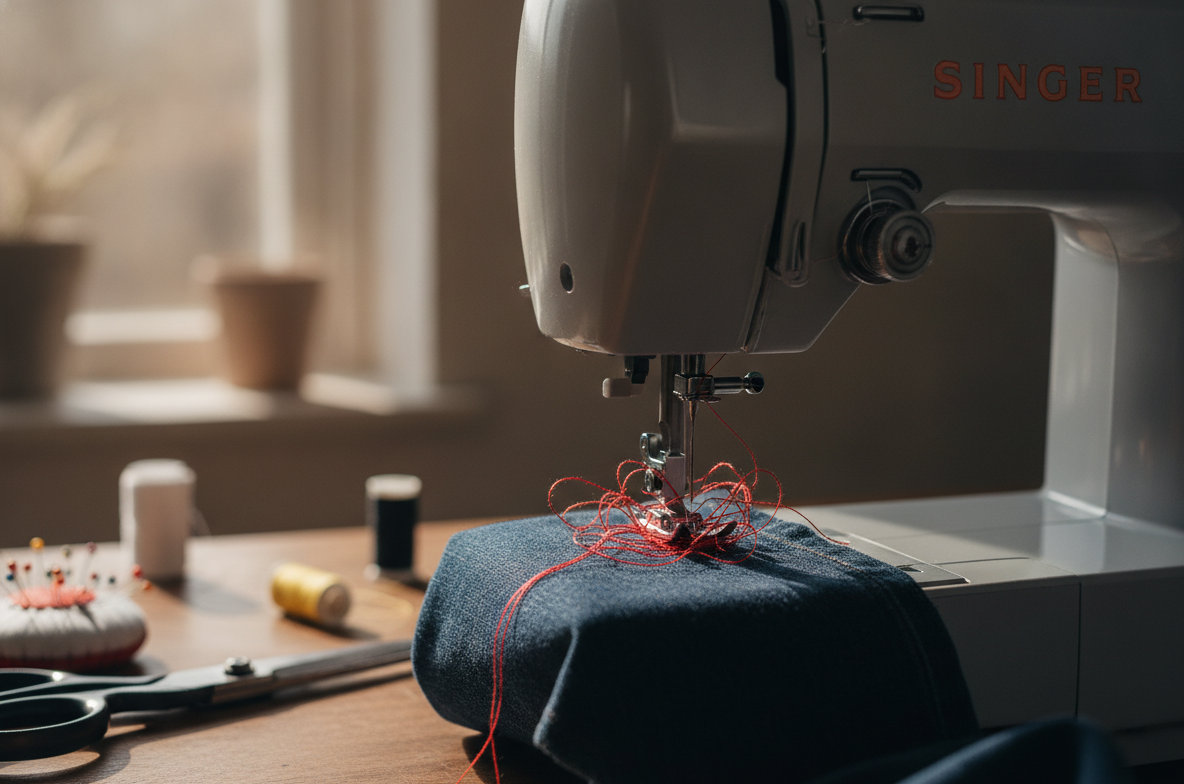
Thread breakage can stem from several factors, including incorrect needle size or type. If the needle is too small for the thread, the thread struggles to pass through the needle eye, causing friction and abrasion. This can also happen if the needle's scarf (the groove above the eye) is too shallow for the thread. A needle that is too hot from friction with dense fabric can also weaken and break thread. Using an embroidery needle with a larger eye for embroidery threads, for instance, prevents excessive friction and breakage. When experiencing thread breaking on a Brother SE700 embroidery machine, the needle is a prime suspect. To learn more about specific troubleshooting steps, you can refer to Brother SE700 Thread Breaking? Fixes for Embroidery Success.
Fabric Damage (Holes, Runs, Snags)
A needle that is too large or too sharp for a delicate fabric, such as silk or chiffon, will leave visible holes or cause runs. For example, using a denim needle on silk will likely tear the fabric. Conversely, a needle that is too dull or has a burr can snag fibers, particularly in knits or finely woven materials. Microtex needles are specifically designed for delicate fabrics to prevent such damage due to their precise, sharp point.
Bent or Broken Needles
Needles bend or break when they encounter too much resistance. This usually happens when the needle is too fine for the fabric, such as using a 70/10 universal needle on several layers of denim. The force required to penetrate the material can cause the needle to deflect or snap. Sewing over pins or hitting the bobbin case can also cause a needle to bend or break. Always use a needle size appropriate for the fabric's density and thickness.
When to Change Your Sewing Machine Needle
Needles are consumables and degrade with use. A general rule of thumb is to change your sewing machine needle every 8-10 hours of sewing time. For specific projects, it is wise to change the needle at the start of each new project, especially if it involves a different fabric type or if the previous project was extensive. Even if a needle does not break, its tip can become dull, bent, or burred, leading to skipped stitches, fabric damage, or thread breakage. Visually inspecting the needle tip for any signs of wear is a good practice.
Needles are relatively inexpensive, typically costing around $3 to $8 for a pack of five to ten needles. This small investment can save significant frustration and project rework. Buying a variety pack of universal needles (sizes 70/10, 80/12, 90/14) and a few specialized packs (like ballpoint or denim) provides a good starting assortment for most home sewists.
Final Considerations for Needle Selection
Always perform a test stitch on a scrap piece of your project fabric before you begin sewing the actual item. This allows you to confirm that your chosen needle size and type, along with thread tension and stitch length, produce the desired result. Pay attention to how the needle penetrates the fabric, the quality of the stitch, and any sounds your machine makes.
Matching the needle to the fabric, thread, and project type is a simple but powerful way to improve your sewing experience and the quality of your finished items. It reduces troubleshooting time and protects your machine from unnecessary strain.