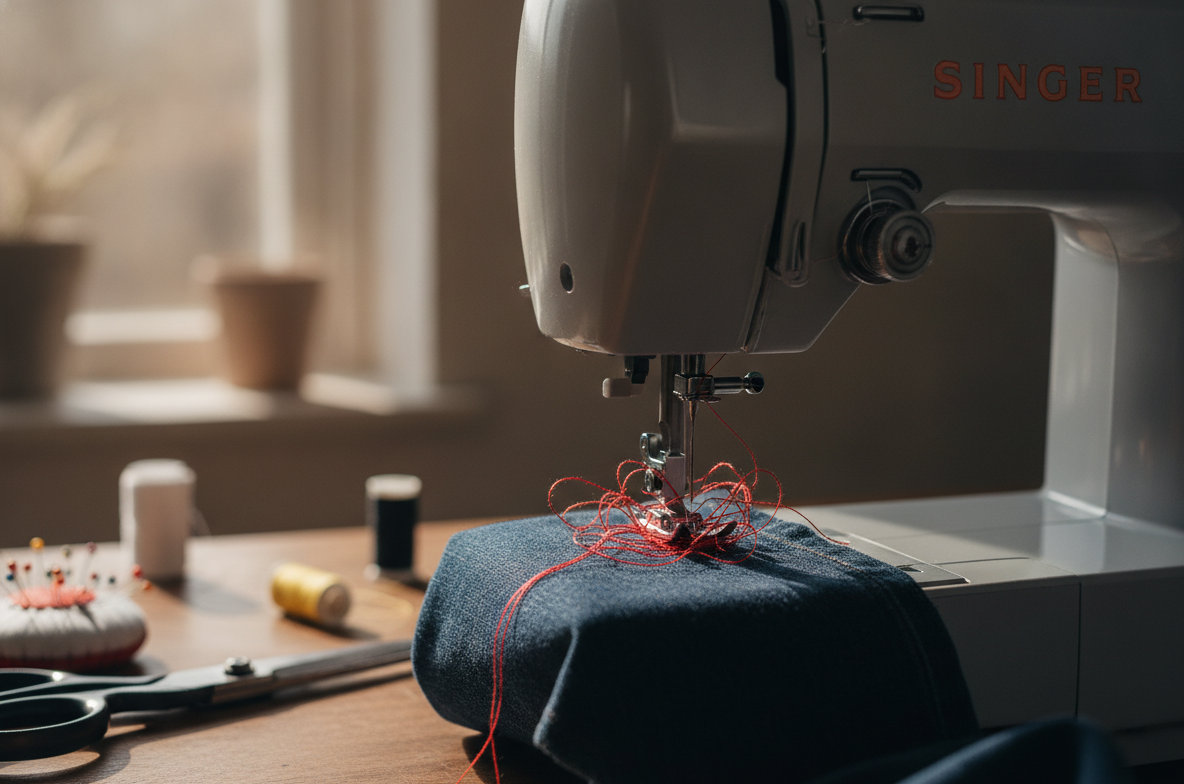
Nine times out of ten, a Singer Heavy Duty 4423 that keeps jamming has an upper threading problem. This powerful machine, known for its speed and durability, is a favorite among home sewists for its ability to handle a variety of fabrics. The SINGER® 4423 (Meltwater Blue) Heavy Duty Sewing Machine delivers 97 stitch applications across 23 stitches, driven by a motor with 50% more power than standard machines. It reaches 1,100 stitches per minute, making quick work of projects. However, even the most robust machines can develop issues, and jamming is a common frustration.
Solving a jamming problem often requires a systematic approach. Start with the simplest and most common causes, then move to more complex diagnostics. This guide will help you identify the precise reason your Singer 4423 is jamming and provide clear steps to fix it.

- The SINGER HEAVY DUTY 4423 sewing machine offers a fresh modern color combined with simplicity and strong.
- With 97 stitch applications, this machine provides the flexibility to tackle various sewing needs.
- The powerful motor delivers 1,100 stitches per minute, allowing you to sew quickly and efficiently without.
- Get started faster with the automatic needle threader, which eliminates eye strain and simplifies the.
Incorrect Upper Threading Is the Top Culprit
Most jamming issues originate from the upper threading path. The thread must pass through each guide and tension disc correctly for the machine to form a proper stitch. If the thread skips a guide, gets caught, or is not seated properly in the tension discs, it can cause tangles, skipped stitches, and ultimately, a jam.
How to Fix Upper Threading Issues
- Raise the Presser Foot: Always raise the presser foot before threading the upper tension discs. When the presser foot is down, the tension discs are engaged, preventing the thread from seating correctly. Lifting the presser foot opens the discs, allowing the thread to slide in properly.
- Remove All Thread: Take out both the upper thread and the bobbin. This gives you a clean slate.
- Rethread Carefully: Follow the threading path indicated on your Singer 4423 precisely. Make sure the thread snaps into each guide. Pay close attention to the take-up lever. It needs to be at its highest point when you thread it. Manually turn the handwheel towards you to raise the take-up lever if it is not already up.
- Check Thread Spool Placement: Make sure the thread spool is seated correctly on the spool pin, and the thread unwinds smoothly without snagging. Use a spool cap appropriate for your thread type to keep the spool from wobbling.
Bobbin Problems Lead to Nests and Jams
After upper threading, the bobbin area is the next most likely source of jams. Issues here often create a tangled mess of thread, sometimes called a "bird's nest," on the underside of your fabric. This can happen due to an incorrectly wound bobbin, improper bobbin insertion, or debris in the bobbin case.
How to Fix Bobbin Issues
- Check Bobbin Winding: A bobbin wound too loosely or too tightly, or unevenly, can cause problems. Rewind the bobbin. Make sure the thread is snug and even.
- Correct Bobbin Insertion: For the Singer Heavy Duty 4423, which uses a drop-in bobbin system, make sure the bobbin is inserted so the thread unwinds in the correct direction (usually counter-clockwise). There is typically an arrow indicating the correct direction on the bobbin case cover. Pull the thread through the tension spring in the bobbin case.
- Clean the Bobbin Area: Remove the bobbin, bobbin case, and throat plate. Use a small brush (often included with the machine) to remove any lint, dust, or broken thread pieces from the bobbin area, feed dogs, and tension spring.
- Inspect Bobbin Case: Check the bobbin case for any nicks, burrs, or damage that could snag the thread. A damaged bobbin case might need replacement, which typically costs $10 to $25.
Needle Issues Are More Common Than You Think
A sewing machine needle is a small but critical component. A bent, dull, or incorrect needle can cause thread breakage, skipped stitches, and severe jamming. Needles should be changed regularly, especially after 8-10 hours of sewing or after a major project.
How to Fix Needle-Related Jams
- Replace the Needle: This is the simplest and most effective first step. A new needle, even if the old one doesn't look damaged, can resolve many problems. Make sure the new needle is inserted correctly, with the flat side facing the back of the machine, pushed all the way up into the needle clamp.
- Use the Correct Needle Type and Size: The type and size of your needle must match your fabric and thread. Using a heavy duty needle (e.g., size 90/14 or 100/16) for denim or canvas is essential, while a universal or sharp needle (e.g., size 75/11 or 80/12) works better for lighter woven fabrics. A ballpoint needle is suitable for knits. An inappropriate needle can cause damage to the fabric, skipped stitches, and jamming.
- Check for Bends or Burrs: Even a slight bend in the needle can cause it to hit the bobbin case or feed dogs, leading to a jam. Feel the tip of the needle for any burrs or bluntness that could snag the thread or fabric.
For more detailed information on needle types, refer to our Sewing Machine Needle Sizes Chart: Which Needle for Which Fabric.
Tension Settings and Their Impact on Jamming
Incorrect tension, either too tight or too loose, can disrupt stitch formation and cause tangles. If your top thread tension is too loose, it can create loops on the underside of your fabric. If it is too tight, it can break the thread or pull the bobbin thread too much.
Adjusting Tension to Prevent Jams
- Reset to Default: Start by setting your upper tension dial to the middle setting, usually between 4 and 5. This is a good starting point for most general sewing.
- Test on Scrap Fabric: Sew a test seam on a scrap piece of the fabric you are using. Examine both the top and bottom of the seam. The stitches should look balanced, with no loops or pulled threads.
- Adjust Gradually: If the top thread looks like a straight line on the bottom of the fabric, your upper tension is too tight. Reduce the number on the dial. If loops appear on the bottom of the fabric, your upper tension is too loose. Increase the number on the dial. Make small adjustments, typically by half a number, and test again.
Regular Cleaning and Maintenance
Accumulated lint, dust, and old oil can interfere with the moving parts of your sewing machine, leading to sluggish operation and eventual jams. The Singer 4423, being a heavy duty machine, can collect debris quickly, especially if you sew frequently with fibrous materials like cotton or fleece.
Cleaning Steps to Prevent Jams
- Unplug the Machine: Always unplug your machine before cleaning or performing any maintenance.
- Remove Throat Plate and Bobbin: Use the screwdriver that came with your machine to remove the throat plate. Take out the bobbin and bobbin case.
- Brush Away Lint: Use a small lint brush to thoroughly clean out the feed dogs, bobbin area, and around the needle bar. A can of compressed air can help dislodge stubborn lint, but use it sparingly and direct the air away from the machine's interior to avoid pushing debris further in.
- Oil Moving Parts: Consult your Singer 4423 manual for specific oiling points. Apply a single drop of quality sewing machine oil to the designated areas. Do not over-oil.
Performing these cleaning steps every 10-15 hours of sewing can significantly reduce jamming incidents and extend your machine's life.
Checking the Presser Foot and Feed Dogs
An incorrect presser foot or issues with the feed dogs can also contribute to jamming, though these are less common causes than threading or needle problems. The presser foot needs to be appropriate for the stitch and fabric, and the feed dogs must be engaging the fabric correctly.
Addressing Presser Foot and Feed Dog Issues
- Use the Correct Presser Foot: Make sure you are using the correct presser foot for your chosen stitch. For instance, a zigzag stitch requires a zigzag foot, not a straight stitch foot, which has a small needle hole that the needle could strike.
- Check Presser Foot Pressure: Some machines have adjustable presser foot pressure. If your machine does, make sure it is set appropriately for your fabric. Too much pressure can flatten knit fabrics, while too little can cause thin fabrics to pucker or not feed evenly.
- Inspect Feed Dogs: Ensure the feed dogs are not lowered for free-motion quilting unless you are actively doing so. Raise them back to their normal position for regular sewing. Check for lint or debris stuck between the feed dog teeth that might prevent them from gripping the fabric correctly.
Fabric and Thread Compatibility
Sometimes, the machine itself is not the problem, but rather the combination of fabric and thread. Using thread that is too thick for the needle, or fabric that is too thick or too thin for the machine's capabilities, can result in jams.
Matching Fabric and Thread to Prevent Jams
- Thread Weight and Needle Size: Use a thread weight that is compatible with your needle size. For example, heavy duty thread requires a larger needle eye.
- Stabilize Difficult Fabrics: When working with very thin, stretchy, or thick fabrics, use an appropriate stabilizer. This can help the fabric feed smoothly and prevent it from getting pushed down into the needle plate hole, which often causes jams.
- Test on Scraps: Always test your fabric, thread, and needle combination on a scrap piece before starting your project. This allows you to fine-tune tension and ensure smooth operation.
When to Call a Professional for Your Singer 4423
Persistent jamming, especially accompanied by unusual noises or a completely frozen handwheel, can indicate a more serious mechanical issue, such as timing problems.
Common Professional Repair Costs
- Minor Adjustments/Cleaning: If the issue is minor, like a stubborn tension problem or a deep clean, you might pay $50 to $100.
- Parts Replacement: Replacing parts like the bobbin case, feed dogs, or a damaged needle bar can cost $80 to $150, including labor.
- Timing Issues: This is a more complex repair where the needle and bobbin hook are out of sync. This can be costly, often ranging from $150 to $250 or more, depending on the severity and parts needed.
Considering the cost of repair versus replacement, remember that the Singer 4423 is a durable machine. However, if the repair cost approaches or exceeds $200, you might consider the value of a new machine. The average lifespan of a well maintained home sewing machine is 10-20 years. For more information, check our article on How Long Do Sewing Machines Last? Lifespan by Type and Brand.
Considering an Upgrade or Replacement?
If your Singer 4423 is consistently giving you trouble despite proper care, or if repair costs are too high, exploring newer models might be a good option. Singer offers other powerful heavy duty machines that share similar robust construction and enhanced features.
SINGER® 4452 Holiday Bundle Heavy Duty Sewing Machine + Accessory Kit
The SINGER® 4452 Holiday Bundle offers an excellent value, providing a heavy duty machine with an extension table and two extra presser feet. It features 32 built-in stitches, giving you more creative options. The removable extension table creates a larger, level surface, which is beneficial for managing larger projects like quilts. This bundle also includes a blind hem presser foot and an open toe foot, allowing for professional finishes and better visibility.
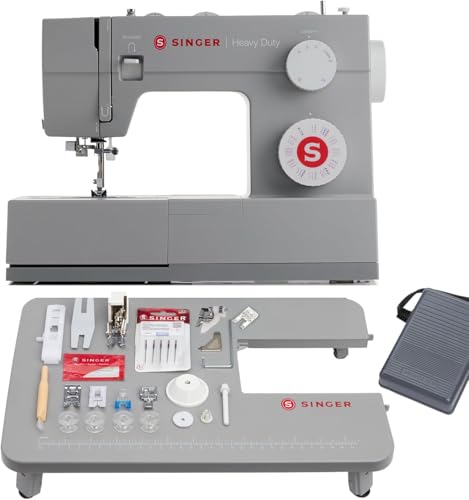
- Easily add a professional touch to your projects at an incredible value! Bundle Includes SINGER Heavy Duty.
- Slide-on the removable extension table for a level sewing surface when sewing larger projects. It fits.
- Bundle includes Bonus SINGER Blind Hem Presser foot for professional hems on garments and Open Toe Foot.
- The stronger motor provides more power for sewing multiple layers and thicker fabrics when you need it.
SINGER® 4432 (Black) High Speed Heavy Duty Sewing Machine + Accessory Kit
The SINGER® 4432 (Black) is another high-performance heavy duty option, boasting a motor 60% stronger than standard models. It provides 32 built-in stitches, delivering 110 stitch applications for a wide range of projects. This machine also comes with essential accessories valued at $60, making it ready for diverse sewing tasks right out of the box. Its powerful motor and extensive stitch options make it suitable for challenging fabrics and intricate designs.

- ✅POWERFUL HEAVY DUTY PERFORMANCE: Designed with a high-performance motor that is 60% stronger than.
- ✅INCLUDES $60 ACCESSORIES & VERSATILE FEATURES: Comes with essential accessories including multiple.
- ✅110 STITCH APPLICATIONS FOR EVERY PROJECT: Choose from 32 built-in stitches with 110 stitch applications.
- ✅110 STITCH APPLICATIONS FOR EVERY PROJECT: Choose from 32 built-in stitches with 110 stitch applications.
Final Thoughts
A jamming Singer Heavy Duty 4423 can be frustrating, but most issues are solvable with careful troubleshooting. Start by rethreading the upper thread and checking the bobbin. With a bit of patience, you can often get your machine running smoothly again and return to your sewing projects.